Product enhancement & strategy.
Advancing the ECOMP Ecosystem from frankenstein to functional.
This project was completed while working with the Department of Labor, you can read more about my time there from the Department of Labor page.
Context
From the start of my time with DOL, my eye has been checking for consistency and logic in every interaction I came across in the existing system. Upon my entry, the ECOMP ecosystem had been in production for 5+ years. The application was originally built on flash and was reskinned for its launch to HTML5 a year before my introduction. The HTML5 effort did improve the aesthetic consistency from the original flash application but the system UX remained in a Frankenstein state from years of different designers and inconsistent client funding. The interactions of the features and the consistency of the designs were surface level at best, demonstrating some aesthetic consistency, yet breaking down functionally once actually used and closely examined.
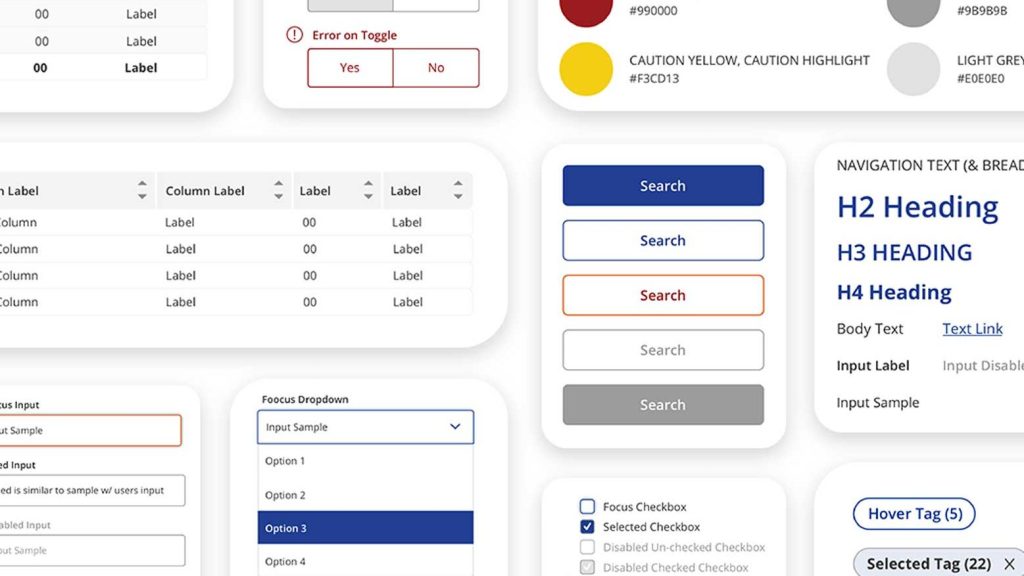
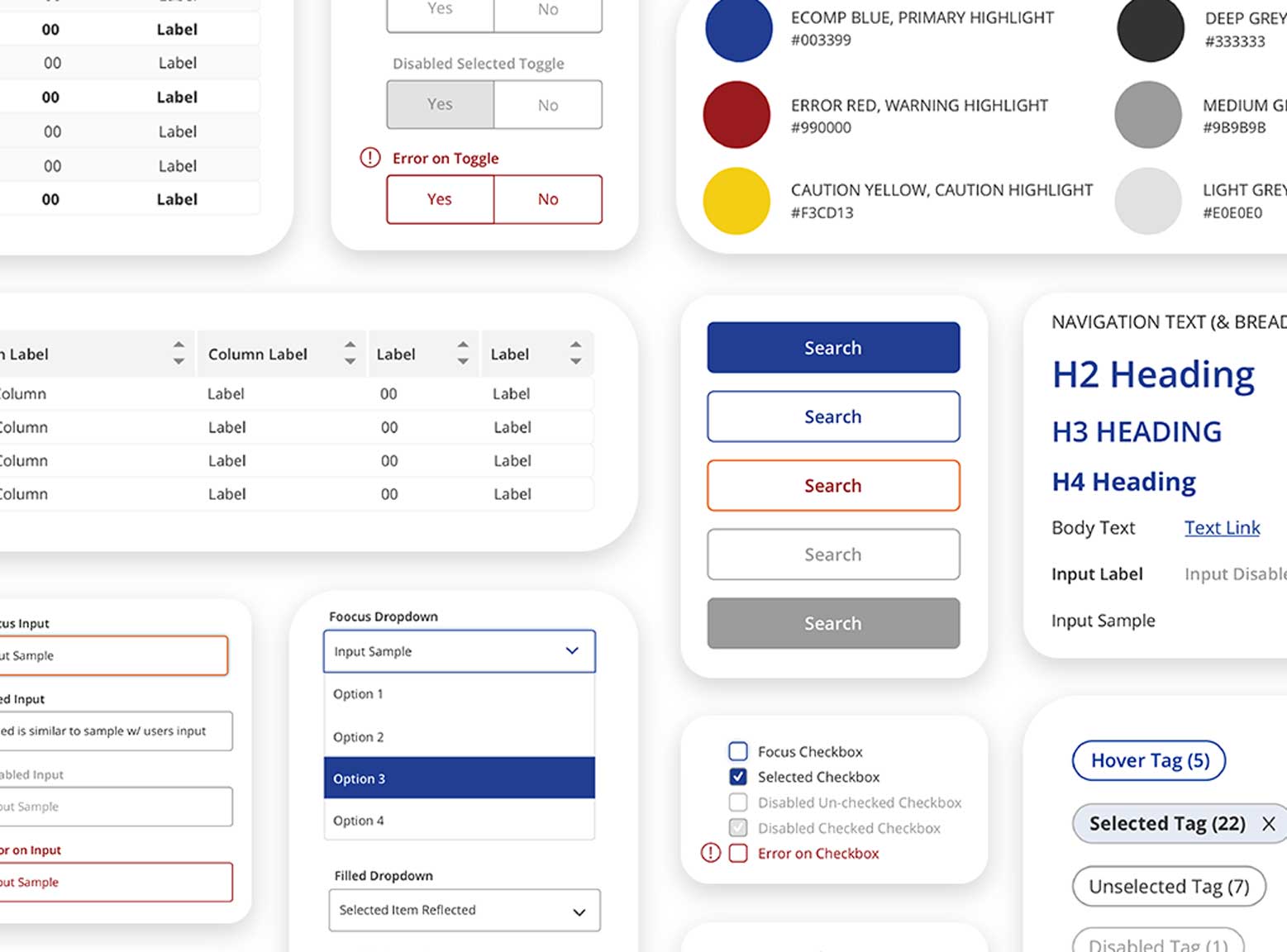
Throughout my first 2 years on the project, the client was not ready to invest in efforts to right these experiences so the design system and holistic refactoring of experience could only be a side project for me. I often invested an hour or two a week but rarely had tremendous time. However, I continued to devote steady efforts knowing that a proper design system requires robust dedication and attention, so establishing a foundation of product awareness, iterative ideation, and steady documentation would best set myself and the team up for success once buy-in was secured.
Initial efforts focused on documenting system inconsistencies in design and patterns of interactions. I created a giant miro board to quickly and consistently document screenshots, quick notes/thoughts, and brief reproduction instructions. As this effort continued and the repository grew I began mapping system elements together (noting similarities and discrepancies) and adding ideas (original concepts and external inspiration) for how each element could be resolved.

Holistic Refactor
Throughout these UI and interaction examinations and as my understanding of the ecosystem and user base expanded, I found a necessity to broaden my analysis efforts to the wider user experience. I discovered that not only were micro-interactions inconsistent (design system necessity) but the workflows and linked experiences were also inconsistent. Over the years of project-focused/feature-driven development, many capabilities were illogically dispersed, inconveniently connected, and each implementation of similar interactions was slightly different.
An illustrative example is the dispersed implementation of feature access and the lack of primary navigation standards. Many primary features had individual “dashboards” accessible from hidden dropdowns within the main navigation, while others were accessible from feature groupings such as reports and forms. Therefore, I began working on concepts for how a single dashboard and consistent navigation could exist. Ensuring the dashboard provided users logical high-level informative and actionable information from which they may jump into features as needed (rather than just knowing to go to feature space to get relevant information). And developing navigation hierarchy standards within which features are logically and consistently accessible.
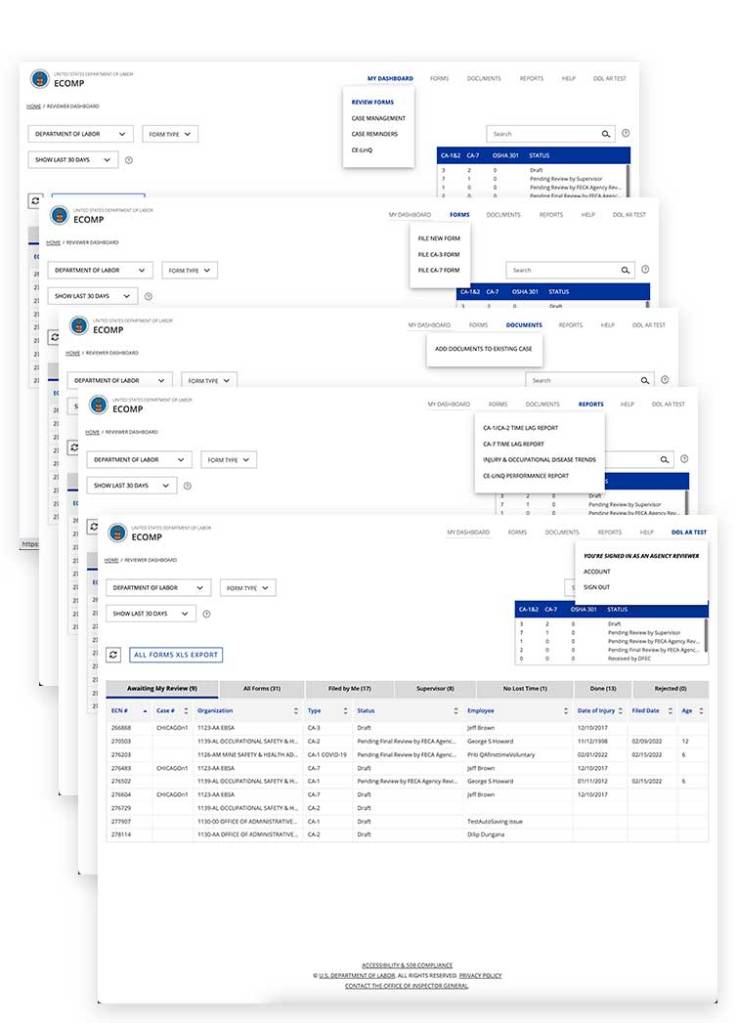
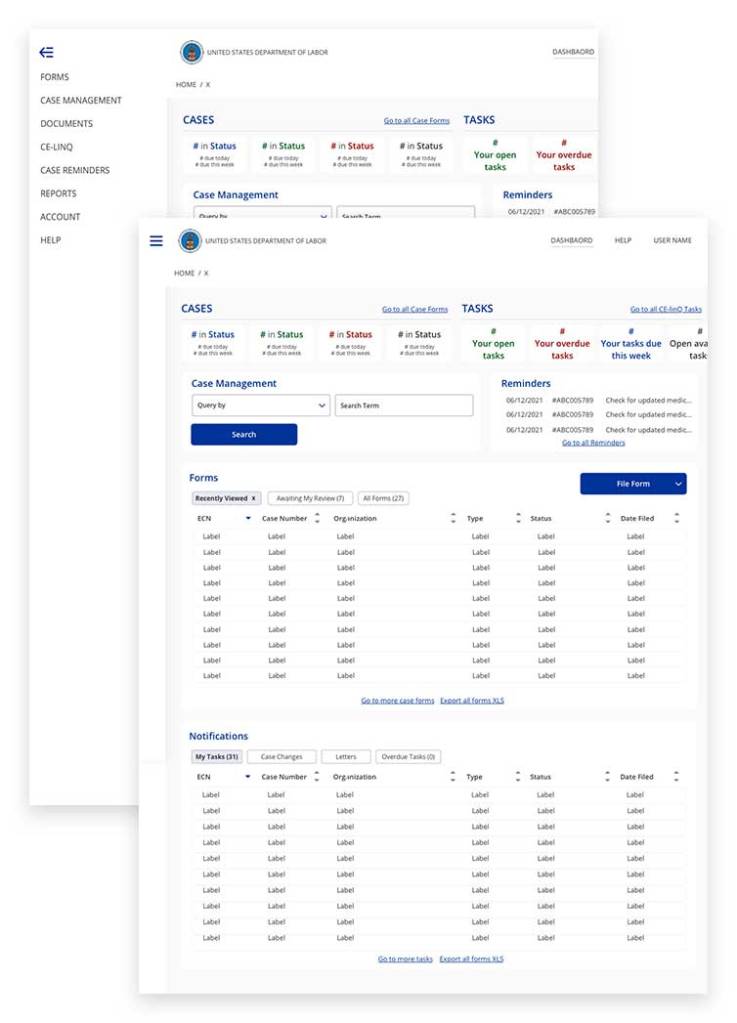
This work was informed by investigations to understand and rank which features are most important to the user and which data points and actionable information need to be displayed at the highest levels to immediately catalyze the user. Through examining each feature I was also able to identify opportunities to unify affiliated experiences and create more natural workflows. This work examined, classified, and linked information-based features to action-oriented features to create more relevant and robust workflows where users may become apprised and conveniently flow into their next steps.
Advocacy
This slow and steady approach, though seemingly not ideal, allowed me to make, break, pressure test, and perfect larger patterns of design elements and interactions to build out a robust library of aesthetic and functional standards. I was also able to lightly roll out some of these concepts along the way through individual project implementation. This approach also meant that parts of the application became temporarily more disjointed in the name of testing, iterating, and proving the value of systematic design changes.
While validating individual design concepts with our users I also tested the wider functional concepts against my increasing visibility into the future of the product. As the product roadmap and UX vision came together portions of the wider UX strategy were validated while others needed reworking. I was in a continuous state of updating or completely reworking previous concepts to incorporate the UX vision as it became illuminated. However, having this foundational work already in progress also allowed me to better contribute to the roadmapping and vision exercises.
Traction
Once I had done enough foundational work to appropriately speak to the need for a design system and experience refactor I began working with internal stakeholders on how to get the wider work on the client’s radar. Since DOL’s funding is tightly aligned to specific projects we had to strategically drive the incorporation of this work into existing projects to demonstrate it’s value and campaign for additional resources/investment.
A major strength in the argument for an ECOMP refactor and design system update was the poor mobile presence of the ECOMP Ecosystem. At the start the site had no intentional mobile-responsive experiences, completely relying upon the native responsive behaviors of HTML5. Partially for this reason and for added user value/ease, the client was very interested in developing a mobile app for the claimant audience. This became an avenue through which we found potential to fund the design system work, due to the unresponsive nature of the current designs and the clear need to do substantial design work prior to jumping into mobile DOL began to see value in updating the interface to a new design system.
An additional avenue through which we began to position the refactor work was the first addition to the ECOMP ecosystem prior to my arrival, the Disability Management Portal (DMP). This product had been developed, abandoned, and picked back up prior to my introduction and therefore needed a lot of work on updating its relevance to the current audience.
Through these two opportunities, DOL agreed to build and test the new mobile-first design system and refactor process on the DMP product. This initiative could then open the door to expanding these efforts to the other 5 products in the ECOMP ecosystem once built, tested, and proven. This approval came through in tandem with the 2022 fiscal year and the efforts are ongoing to build and scale these efforts. If you have any questions or want an update on how the project is going please contact me.


I led the DOL engagement while working with Intevity from 2019 to present. Our work with DOL focused on enabling the Office of Workers Compensation and advancing their employee and claimant processes. Our objective was to strategically expand the ECOMP ecosystem and UX team for the engagement.
This isn’t even the half of it.
Let’s talk specifics, I love to share my perspective and the details of my experience.
 Olivia Holland